Press Releases 2025

Cancel
  • Press Release #32 / 2025

    Self-Consumption of Solar Power is Rising Sharply in Germany

    December 04, 2025

    Until 2009, German PV system owners hardly used any of the electricity they generated themselves, as the feed-in tariff for photovoltaic electricity was higher than the price of electricity purchased from the grid. Since this ratio has reversed and sector coupling has expanded the possibilities for use, the economically motivated self-consumption of solar power in Germany has risen sharply. Research scientists at the Fraunhofer Institute for Solar Energy Systems ISE have now developed the first method for quantifying PV self-consumption based on data from the market master data register and transmission system operators. They published their findings in an analysis for the German Federal Environment Agency.

    more info

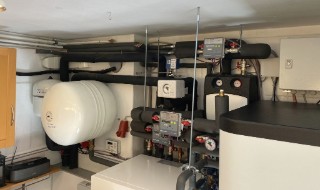
  • The goal of "Heat Pumps Watch" is to collect, evaluate, and present scientific findings on heat pumps making them easy to understand and useful for different target groups. The spin-off led by scientist Dr. Marek Miara from the Fraunhofer Institute for Solar Energy Systems ISE in Freiburg aims to provide orientation on the topic of heat pumps for professionals, policymakers, and homeowners considering a change in their heating systems. Heat Pumps Watch is a non-profit organization, and its first project is funded by the Climate Neutrality Foundation.

    more info
  • Heat pumps provide efficient and climate-friendly heating also in existing buildings. This is the conclusion of a research project by the Fraunhofer Institute for Solar Energy Systems ISE. Over four years, researchers conducted detailed measurements on 77 heat pumps in single-family to three-family homes. The result: the heat pumps achieved seasonal performance factors ranging from 2.6 to 5.4. The CO2 emissions of the heat pumps, calculated for the first time considering time-variable factors, were 64 percent lower in 2024 compared to those of natural gas heating systems. The research team also conducted long-term sound measurements and investigated how photovoltaic systems can be integrated into heat pump operation. In addition to Fraunhofer ISE, two energy suppliers and nine heat pump manufacturers participated in the project.

    more info
  • Deutsche Bahn is the largest electricity consumer in Germany, operating its own power grid of nearly 8,000 kilometers in length. The project "PV4Rail" examined how this grid can be utilized for the feed-in of solar power. The consortium lead by Fraunhofer ISE developed and tested an inverter for the direct feed-in of photovoltaic power, analyzed the photovoltaic potential along the tracks, and conducted techno-economic studies of railway power PV systems. These could become an important component of the energy transition if regulatory and market disadvantages were addressed.

    more info
  • Hans-Martin Henning: Impulsgeber der Fraunhofer-Energieforschung geht in den Ruhestand
    © Fraunhofer ISE / Foto: Michael Spiegelhalter

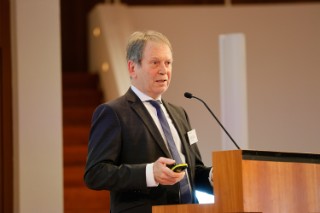
    Prof. Hans-Martin Henning was honored yesterday with a scientific symposium to mark his retirement. The director of the Fraunhofer Institute for Solar Energy Systems ISE in Freiburg also shaped the Fraunhofer Society's energy research for many years. As chairman of the Expert Council for Climate Issues, he advised the German government on the implementation of the Climate Protection Act from 2020 to 2025 and, in this role, was a vocal advocate for consistent measures.

    more info
  • The transition of the heavy-duty and commercial vehicle sector to zero-emission engines is driving the expected production volume of fuel cells. At the same time, electrolysis is gaining importance as a building block for a low-emission energy economy. New production methods are needed to ramp up the market for both technologies. In this context, Fraunhofer ISE has established a versatile platform for research on the production of membrane electrode assemblies to support component manufacturers as well as machinery and plant engineers in addressing production challenges associated with fuel cells and electrolyzers. The focus is on innovative, continuous processes that enable high throughput rates and cost reductions, such as roll-to-roll manufacturing. Furthermore, pro-duction research considers the entire value chain from catalyst powder to 7-layer MEA, including quality control.

    more info
  • © Universität Freiburg / Foto: Silvia Wolf

    An international research team of photovoltaics scientists has taken a crucial step toward the industrialization of perovskite silicon tandem solar cells. They demonstrated that passivation of the perovskite top cell is possible in combination with textured silicon bottom cells featuring large pyramid size, which are the current industry standard for solar cells. Additionally, they discovered that the passivation affects the entire perovskite layer – unlike silicon, where surface treatment only influences the upper layers – leading to further efficiency improvements. The PV researchers from King Abdullah University of Science and Technology (KAUST), University of Freiburg and Fraunhofer Institute for Solar Energy Systems ISE presented their technological and scientific innovations for the passivation of perovskite top cells in the journal Science.

    more info
  • Press Release #25 / 2025

    Fraunhofer ISE develops test procedure for grid-forming inverters

    September 04, 2025

    In addition to expanding renewable energy generation, a successful energy transition requires stable system operation at all times. To achieve this, renewable energies and storage power plants will have to take on extensive system services and essential grid-forming properties in the future. In the “GFM Benchmark” project, Fraunhofer ISE developed a test procedure for grid-forming inverters on behalf of the four German transmission system operators and applied it to devices from various manufacturers. On the one hand, the project provided a comprehensive overview of the market readiness of grid-forming inverters. On the other hand, the project results provide an important practical check for new national and European testing standards.

    more info
  • The groundbreaking ceremony on July 22, 2025 marked the start of construction for the Engineering Center for Sustainability (Ingenieurzentrum Nachhaltigkeit – IZN) on Freiburg’s airport campus. The new building will foster closer collaboration between Freiburg’s five Fraunhofer institutes and the University of Freiburg under the umbrella of the Department of Sustainable Systems Engineering (INATECH).

    more info
  • In the first half of 2025, Germany and many other European countries generated more solar power than ever before. This was offset by lower electricity generation from wind energy. As a result, the share of renewable electricity in Germany's net public electricity generation was 60.9 percent, down from 65.1 percent in the first half of 2024. Within the European Union, public electricity generation from solar and wind fell from 358.1 terawatt hours (TWh) in the first half of 2024 to 344.4 TWh in the first half of 2025. This is according to the half-yearly data on public net electricity generation presented today by the Fraunhofer Institute for Solar Energy Systems ISE. The evaluation is based on the data platform energy-charts.info.

    more info
  • Around the world, there is a lack of comprehensive medical care for people living in remote areas. Researchers at the Fraunhofer Institute for Solar Energy Systems ISE and the Fraunhofer Institute for Surface Engineering and Thin Films IST have devised a solution for this in the PreCare project: a flexible, modular health platform with solar power supply that can be installed on the bed of a pickup truck. It is already in use in South Africa and Namibia. The team was presented with the Innovations for a Better Future award from the Fraunhofer-Zukunftsstiftung (Fraunhofer Future Foundation) for this development.

    more info
  • Ausschnitt eines solarthermischen Parabolrinnenkollektors.
    © Fraunhofer ISE

    Interest in renewable energies is also growing in industry. The reasons are price fluctuations in fossil energy sources, foreseeably rising CO₂ costs, and supply risks due to increasing geopolitical tensions. Investments in solar thermal systems are more economical in many cases than operating purely fossil-fuel-based systems for generating process heat. This conclusion is drawn from a study published today by the Fraunhofer Institute for Solar Energy Systems ISE.

    more info
  • The Port of Rotterdam and the Fraunhofer Institute for Solar Energy Systems ISE are working with Australian partners to investigate opportunities for Western Australia to become a world-class producer, user and exporter of renewable hydrogen. Western Australia could provide for a substantial portion of the European demand for hydrogen in 2050. The TrHyHub Study, a collaboration between key stakeholders in Australia, Germany, and the Netherlands, analyzed the critical components that could deliver a supply chain from the Mid West Hydrogen Hub in Oakajee to Germany via the Port of Rotterdam. In the short term, ammonia is the most suitable option, with substantial cost savings to be anticipated in the future.

    more info
  • As part of the "SPHINX" research project, the Fraunhofer Institute for Solar Energy Systems ISE has set up a pilot line for PV roof tiles at Module-TEC in Freiburg. The flexible, automated production allows the project partner Freesuns, a Swiss solar roof manufacturer, to produce its newly developed matrix shingle roof tiles on a pilot scale before moving into mass production. The production line will manufacture a total of 4,000 solar roof tiles using the matrix shingle technology. Since March 2025 the first 800 modules have been produced. Freesuns is currently installing the first roof systems into 5 existing buildings in Switzerland. The new solar roof tiles are on exhibit from May 7 - 9 at Smarter E Europe / Intersolar at the Fraunhofer ISE booth in Hall A1.

    more info
  • Research scientists at the Fraunhofer Institute for Solar Energy Systems ISE have developed a measurement method that allows the performance of back-contacted solar cells to be determined without contact in the production line. Measuring the current-voltage characteristic curve is the most important test in solar cell quality control. Eliminating physical contact with the solar cell saves time and thus allows significantly higher throughput rates in production. It also eliminates mechanical stress on the solar cells during measurement and reduces the maintenance costs of the measuring system. The researchers tested the method for the first time in 2022 and have now successfully transferred it to IBC (interdigitated back contact) cell architectures in a production-related environment.

    more info
  • Wall chargers for charging electric vehicles can be found on more and more homes. But how can the solar power from your own roof be used as smartly as possible? In the “Wallbox Inspektion” project, a consortium consisting of Fraunhofer Institute for Solar Energy Systems ISE, HTW Berlin and ADAC e.V. developed the first test procedure for solar-optimized controlled charging and used it to test wall chargers available on the market. Together with an industry advisory board, a test guideline for unidirectional and solar charging was developed and the test results are quantified in a score that is easy to understand for end users. The intention is to increase transparency for consumers in the wall chargers market and establish a quality standard for the industry. The project was funded by the Federal Ministry for Economic Affairs and Climate Protection.

    more info
  • Reports of UV-induced degradation in TOPCon-based photovoltaic modules are currently a concern for the PV industry. The Fraunhofer Institute for Solar Energy Systems ISE is therefore investigating common test methods for their validity. The latest results of their comparative indoor and outdoor tests show that the currently used UV tests rate the degradation of TOPCon silicon PV modules significantly higher than the actual performance reduction. To achieve more meaningful test results in the laboratory, the PV modules must be stabilized after UV exposure and before performance measurement. This week, the institute presented comprehensive analyses of the recovery dynamics of TOPCon modules at the SiliconPV conference.

    more info
  • Press Release #08 / 2025

    Solar module output often overstated

    March 12, 2025

    A research team from the Fraunhofer Institute for Solar Energy Systems ISE has evaluated over 70,000 power measurements on photovoltaic modules that have been carried out in the institute's calibration laboratory, CalLab PV Modules, since 2012. In the process, the researchers found that since around 2017, the negative discrepancy between the performance data of the PV module manufacturers and the research institute's measurement results has been increasing. Until 2016, more power was measured in the laboratory on average than was promised by the manufacturer. Since then, a negative trend has emerged, particularly in the years 2020 to 2023, leading to an average power reduction of about 1.3 percent. The latest data from 2024 show a slight turnaround.

    more info
  • Press Release #06 / 2025

    How will hydrogen come to Baden-Württemberg?

    March 03, 2025

    Baden-Württemberg will not be able to meet its future demand for hydrogen and its derivatives from domestic production alone. The Fraunhofer Institute for Solar Energy Systems ISE has therefore investigated how Baden-Württemberg can be supplied by imports in the future. The researchers analyzed how and at what cost hydrogen and its derivatives methanol and am-monia can be imported via pipelines and waterways. Production in Germany was also considered for comparison purposes. European pipeline transportation is therefore the most cost-effective option. The study was funded by the Baden-Württemberg Ministry for the Environment, Climate Protection and the Energy Sector.

    more info
  • Proton exchange membranes (PEM) are one of the most promising technologies for the production of green hydrogen by electrolysis. To reduce the material and manufacturing costs for PEM electrolyzers, the Fraunhofer Institute for Solar Energy Systems ISE is researching scalable production processes. Now, for the first time, it has succeeded in producing ultra-fine porous transport layers made of titanium using a screen printing process, thereby reducing the cost of catalyst materials. Industry-standard, scalable equipment was used. At the Hannover Messe (March 31 to April 4, Hall 13, C41), the institute will present samples of the optimized microporous transport layer, along with other innovations.

    more info