 Fraunhofer Institute for Solar Energy Systems ISE
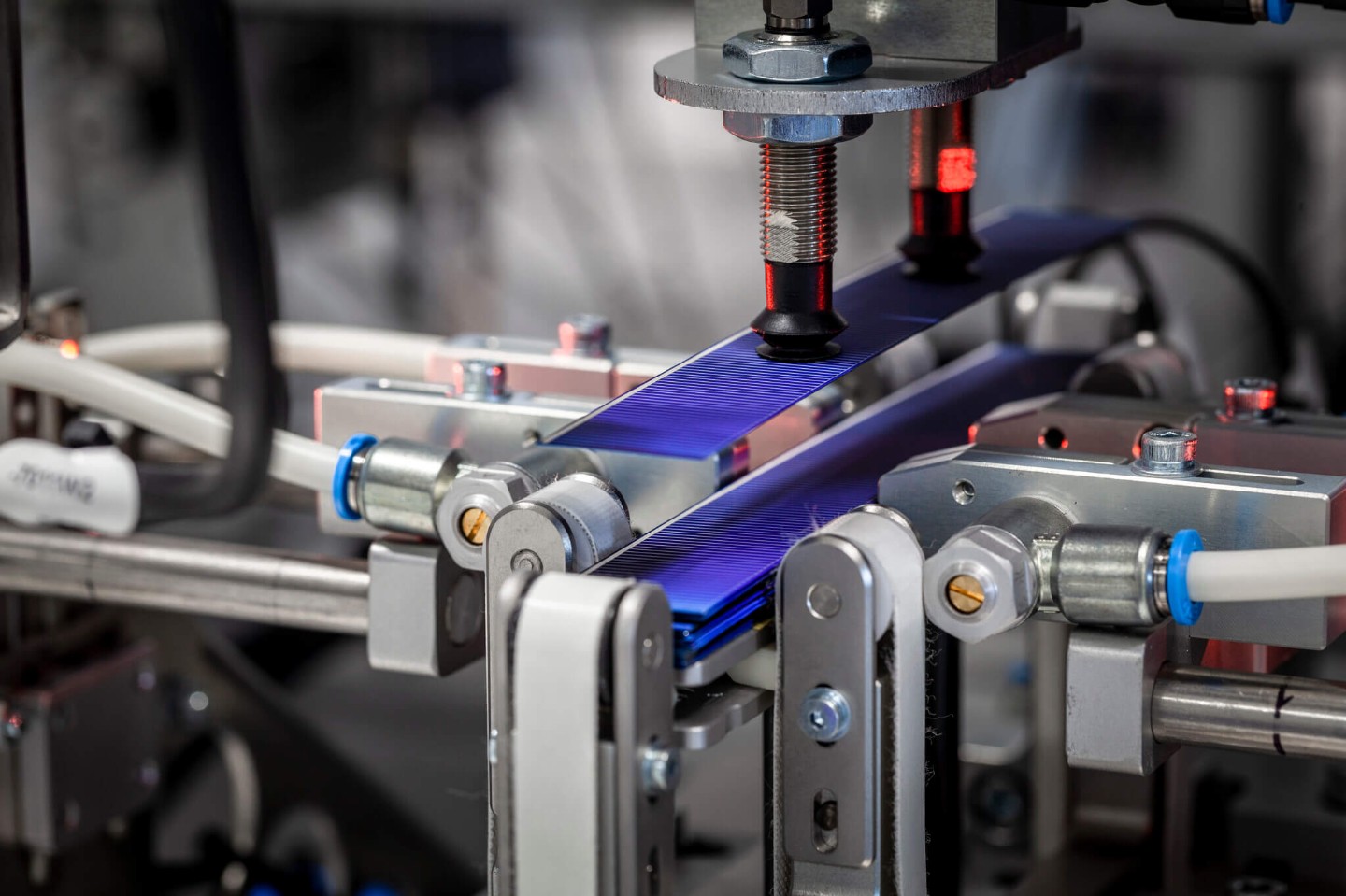
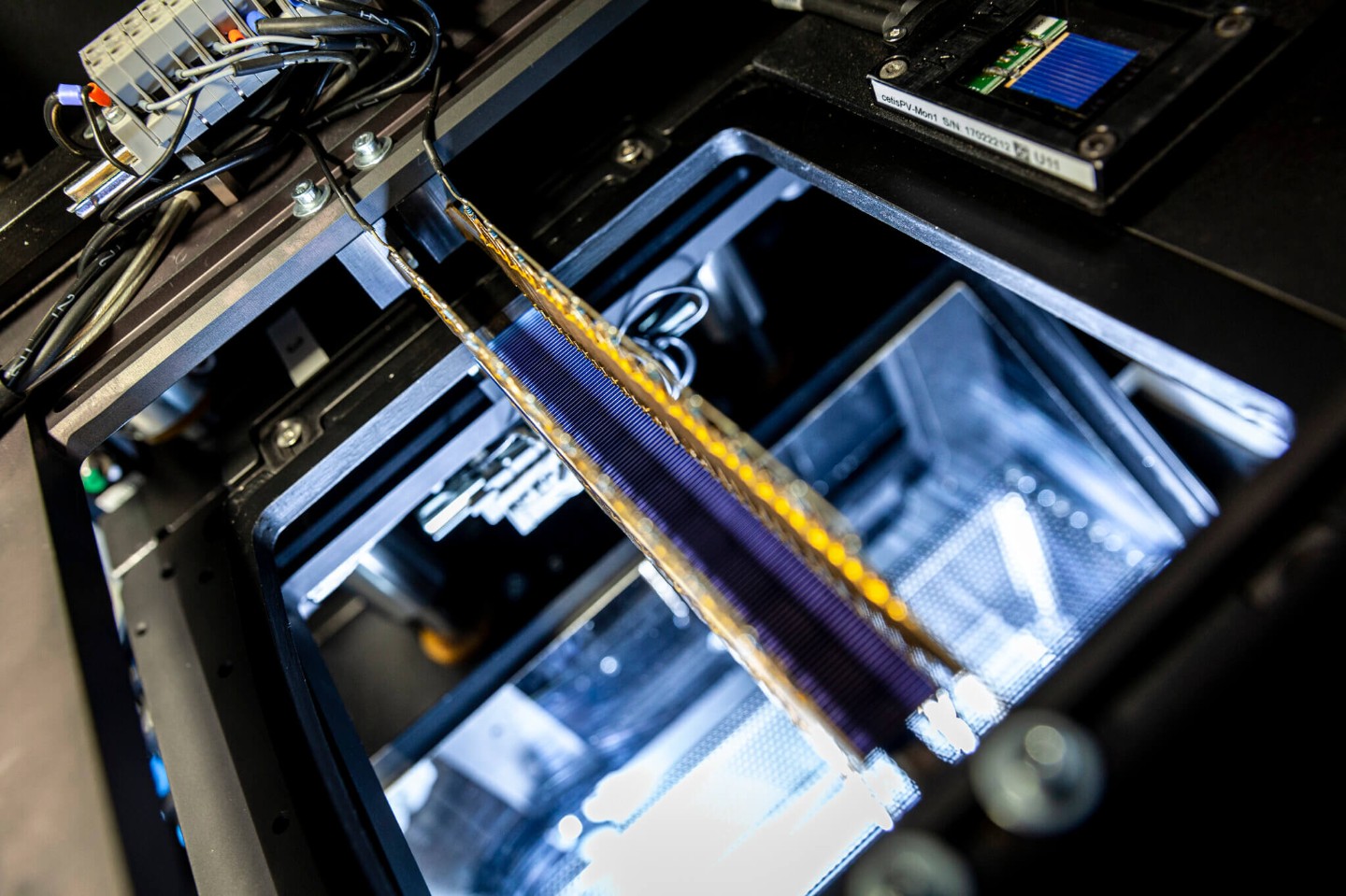

To make solar modules as efficient as possible, the photoactive area must be maximized and the power loss must be minimized. The technique of laying out solar cells in a module so that their edges overlap like shingles on a house roof is called »shingling«
With the shingled layout, there are fewer gaps between the individual solar cells so more of the sunlight that is incident on the module can be absorbed. Instead of using external connectors to transport the current from one cell to the next, the area of the cell overlap is used as an electrical connector.
The best way to design shingle solar cells is to first divide the cells into narrow strips. These cell strips give the shingle solar cells and modules an aesthetic appearance. Large metallic areas for the connectors are hidden by the overlap so that the module area is homogeneous, making them particularly attractive for integrated applications like building facades or car roofs. In addition, shingled solar cells reflect less light, and thus generate more electricity.
The adaptation of solar cell production from the conventional approach to shingled solar cells requires some dedicated optimizations, however. In recent years, we have tested and further developed these techniques in a pilot line production at Fraunhofer ISE. We have evaluated low-damage laser separation processes (e.g. thermal laser separation) and implemented them in the pilot line. For the suppression of edge recombination, we developed a passivated edge technology for which we obtained corresponding patents.
R&D Services for Solar Cell and Module Manufacturers and Equipment Manufacturers
We are open for inquiries regarding research contracts or cooperations within the scope of joint projects. Our portfolio includes:
- Adaptation of metal electrode design
- Adaptation of laser cutting procedures for cutting out the shingles
- Minimization of power losses through recombination at the solar cell edges
- Providing samplings of our solar cell manufacturing processes and comparisons with conventional approaches.
- Accompanying the changeover process in the production
- Comparison of existing processes and production line optimization
- Testing and refinement of new equipment concepts and preparation for use in series production.