 Fraunhofer Institute for Solar Energy Systems ISE
The 39th edition of the International Energy Workshop (IEW) will take place from June 29 to July 1, 2020 in Freiburg, Germany and will be hosted by the Fraunhofer Institute for Solar Energy ISE. The IEW is a leading conference for the international energy modeling community. In a world of environmental and economic constraints, energy modeling is an increasingly important tool for addressing the complexity of energy planning and policy making. The IEW provides a venue for scholars and researchers to compare modeling tools, to discuss modeling advances for emerging energy sector issues, and to observe new trends in the global energy sector.
more infoNews 2019
-
-
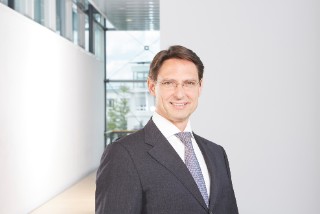
Christopher Hebling, division director of Hydrogen Technologies at the Fraunhofer Institute of Solar Energy Systems ISE, was appointed Honorary Professor of Chemical Engineering in the Faculty of Engineering and the Built Environment at the University of Cape Town (UCT) in South Africa. Besides research and teaching, Hebling will promote the cooperation between the Fraunhofer-Gesellschaft and the South African scientific community in the fields of hydrogen and solar technologies.
more info -
The first Solar World Congress in South America takes place in Santiago de Chile from November 4 to 7, 2019. The Congress will be held by the International Solar Energy Society (ISES) together with the International Conference on Solar Heating and Cooling for Buildings and Industry of the IEA (International Energy Agency) Solar Heating and Cooling Programme (SHC). The local host is SERC-Chile (Solar Energy Research Center), a consortium of seven Chilean Universities, as well as the Fraunhofer-Chile Foundation. The Fraunhofer Institute for Solar Energy Systems ISE and the Center of Solar Energy Technologies-Fraunhofer Chile Research (FCR-CSET) participate in the congress with a booth and presentations by its experts.
more info -
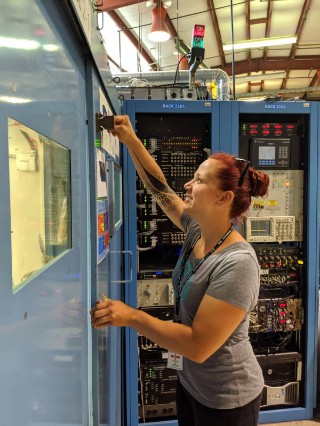
In honor of her excellent research, Dr. Laura Mundt was awarded the Eva Mayr-Stihl Young Researcher Award of the Eva Mayr-Stihl Foundation. Her doctoral dissertation entitled “High-Resolution Analysis of Perovskite Absorbers in Photovoltaics” was carried out at the Institute for Sustainable Technology Systems (INATECH) of the University of Freiburg and the Fraunhofer Institute for Solar Energy Systems ISE in Freiburg. The prize was awarded at the opening ceremony of the 2019/2020 academic year in Freiburg.
more info -
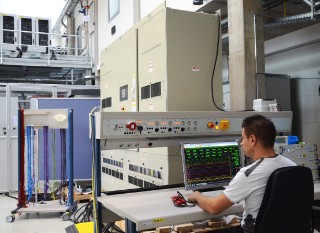
In the future electricity grid, inverters must assume greater responsibility for the grid stability due to higher feed-in of fluctuating renewables. In Freiburg at the new multi-megawatt laboratory of the Fraunhofer Institute for Solar Energy Systems ISE, power electronic devices are developed and tested according to these new functionalities. A few weeks after officially opening the new lab building in North Freiburg, a solar inverter with a nominal power of 2.5 megawatts and a maximum DC voltage of 1500 volts was tested in the accredited TestLab Power Electronics.
more info -
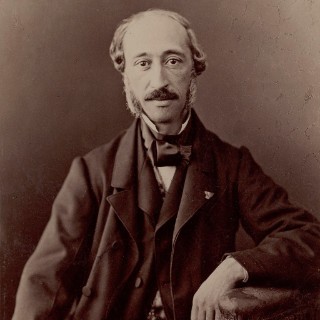
Photovoltaics is a young, commercially available clean energy technology, however, its origin goes back to 1839 when Edmond Becquerel first reported the effect of light on the generation of electric currents in matter. Today, photovoltaics has become a pillar of the energy system transformation. The symposium in recognition of Edmond Becquerel will be held on March 24, 2020 in Paris.
more info -
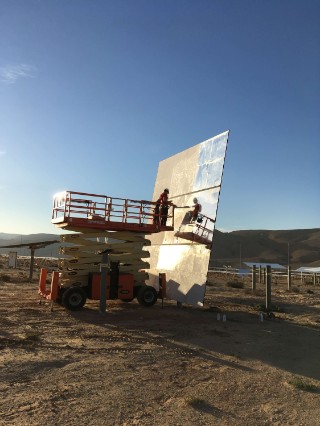
The 2nd workshop within the RAISELIFE project takes place on Thursday, 28 November in Düsseldorf, Germany. Among the speakers will be scientists from the Fraunhofer Institute for Solar Energy Systems ISE who will talk about the durability of CSP mirrors and absorber coatings as well as the optimization of recoating intervals.
more info -
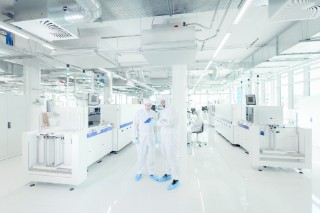
Sufficient production capacity and a European supply chain would make vertically integrated photovoltaic production in Germany and the rest of Europe competitive. This was the conclusion of a study commissioned by the German Mechanical Engineering Industry Association (VDMA) and carried out by the Fraunhofer Institute for Solar Energy Systems ISE. Researchers compared the costs of producing the leading technology based on surface-passivated monocrystalline silicon solar cells in Germany/Europe with production in China.
more info -
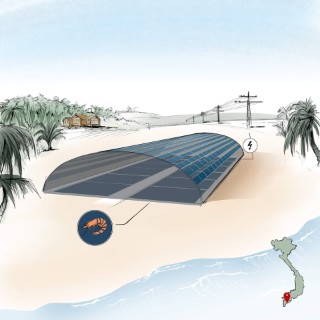
Like other countries in Southeast Asia, Vietnam is experiencing strong economic and population growth. Its energy demand is currently increasing by ten percent each year and the competition for land use is growing as a result. With the project “SHRIMPS” (Solar-Aquaculture Habitats as Resource-Efficient and Integrated Multilayer Production Systems), the Fraunhofer Institute for Solar Energy Systems ISE and its partners want to demonstrate that dual land use for aquaculture and photovoltaics can solve these systemic problems. Pilot plants are being installed and tested along the Mekong’s upper basin and in the Mekong Delta.
more info -
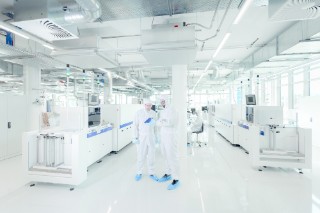
PV Nano Cell Ltd., the developer of Sicrys™ conductive inks based on single crystal nano-particles of silver and copper, and the Fraunhofer Institute for Solar Energy Systems ISE announced remarkable results using the ink in the development of innovative metallization technologies for solar cells with Inkjet and Rotational Printing.
more info -

Researchers at the French Centre de Nanosciences et de Nanotechnologies (C2N) have succeeded, in collaboration with researchers at Fraunhofer ISE and others, to efficiently trap sunlight in a solar cell thanks to an ultrathin absorbing layer made of 205 nm-thick gallium arsenide (GaAs) on a nanostructured back mirror. With this new process of fabrication, an efficiency of nearly 20% was obtained.
more info -

The Fraunhofer ISE, the Fraunhofer CSET and the CSIRO Mining Center in Santiago de Chile have successfully passed the first proposal round for the new Chilean institute for clean energy technologies.
more info -

The Fraunhofer Institute for Solar Energy Systems ISE in Freiburg implemented new analytic models into the software SmartCalc.CTM which simulates the losses and gains in power output due to cell-to-module (CTM) integration. Significantly extended features now include the analysis of solar modules with bifacial solar cells and the freedom to define arbitrary operation conditions. SmartCalc.CTM now supports module optimization beyond laboratory conditions for an even greater variety of technologies.
more info -

Perovskite based solar cells have made tremendous progress over the last decade achieving outstanding lab-scale efficiencies of 24.2% early 2019 in single-junction architecture and to an astonishing 28% in tandem (perovskite associated with crystalline silicon), turning it into the fastest-advancing solar technology to date. The Fraunhofer Institute for Solar Energy Systems ISE is among the founding members of the European Perovskite Initiative (EPKI) that was launched during the Smarter E Europe in Munich today.
more info -

After the success of the SFERA 2 (Solar Facilities for the European Research Area) training courses program, the SFERA 3 consortium is pleased to present the continuation of the program starting with the topic of solar towers with focus on optics and power measurement. The Fraunhofer-Institute for Solar Energy Systems ISE is a partner in the training on solar tower systems and will present simulation tools and measurement technology.
more info -

From May 28 -29, the Polymer Competence Center Leoben (PCCL) and the Fraunhofer Institute for Solar Energy Systems ISE, supported by Austrian Photovoltaics Technology Platform, will host the 2019 SOPHIA workshop “PV-Module Reliability”. The workshop in Graz, Austria, will focus on reliability aspects of innovative materials, developments in modeling and the standardization of lifetime predictions. Experts from research and industry will also discuss the influence of reliability and service life on the sustainability of PV modules with the participants.
more info -
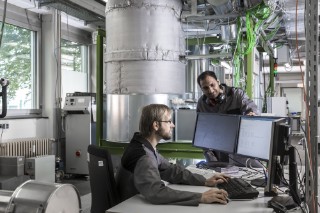
Concentrated solar radiation is a very promising renewable energy resource. The best known application is electricity generation in Concentrated Solar Power (CSP) plants, but other applications have also been demonstrated, such as production of solar fuels, water treatment and research in advanced materials. Europe is a leader in research and development of this technology. In line with this development, the European Union is promoting the opening of key Research Infrastructures (RIs) in solar concentrating systems for both academia and industries for carrying out energy and materials research as well as research in other fields using the extreme temperature conditions in solar concentrators. Within the ‘Solar Facilities for the European Research Area Third Phase (SFERA-III)’ Project, the Fraunhofer Institute for Solar Energy Systems ISE provides access to its laboratories.
more info -
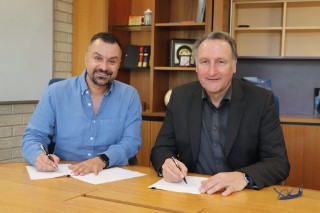
To strengthen the partnership in the Collaboration Cluster for Photovoltaic Silicon Material Characterization CCPV, representatives of two Australian elite universities, the Australian National University (ANU) and the University of New South Wales (UNSW), signed a Memorandum of Understanding (MoU) with the Fraunhofer Institute for Solar Energy Systems ISE.
more info -
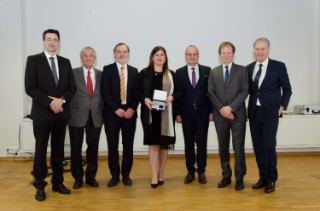
The Croatian Minister for Regional Development and EU Funds, Mrs. Gabrijela Žalac, accompanied by the Croatian Ambassador in Germany, Dr. Gordan Grlić, and Consulate General Ivan Sablić visited the Fraunhofer Institute for Solar Energy Systems ISE in Freiburg on 28th and 29th of January 2019. The visit was organized to concretize the cooperation in research and development between the two countries as well as to establish a fully integrated photovoltaic manufacturing line (10GW – GreenFAB) in Croatia in the context of regional development.
more info -
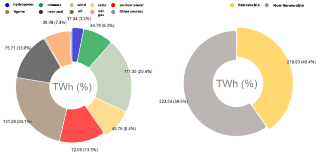
Researchers at the Fraunhofer Institute for Solar Energy Systems ISE have just released their annual assessment on the net electricity generation for Germany’s public power supply in 2018. Based on the production figures, solar energy showed the largest growth at 16 percent, ahead of wind energy with 5.4 percent growth. At the same time, the net electricity generation from coal, gas and hydropower decreased. In 2018, renewable sources accounted for over 40 percent of the public net electricity generation, i.e. the electricity mix fed into the public power grid.
more info