

Extensive field tests for photovoltaics
Acoustic and power yield tests
Combined indoor and outdoor tests
Analyses of electricity and agricultural yields
Power measurement, land reference system
Qualification of tracking PV systems
Measurement and prediction of solar radiation and PV power
Testing laboratories for modules, batteries and digitization
In addition to conventional PV systems, measurements can also be carried out on integrated PV systems, e.g., on noise barriers, at the test site. A 32 m long and 4 m high test noise barrier is available for this purpose, which can be equipped in parts or completely depending on the project.
Conventional and solar acoustic elements can be mounted between the H-posts, which are fixed at intervals of 4 m. Important insights are gained not only from yield measurements of the solar elements and the measurement of acoustic properties, but also from handling, details of installation, cabling, and the evaluation of issues such as glare, soiling, or self-shading.
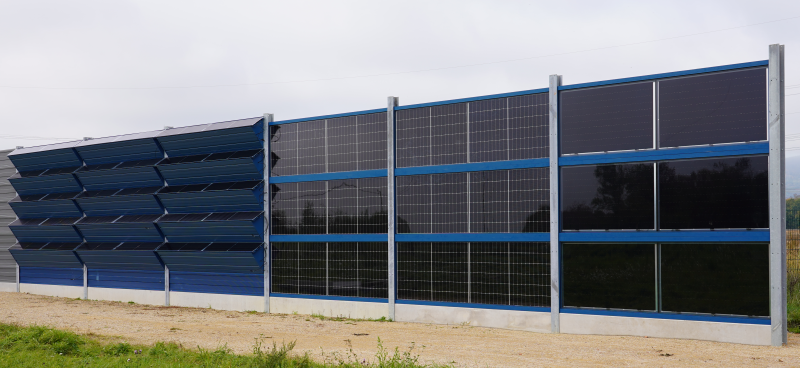
A noise barrier adapted for the “Sphinx” project
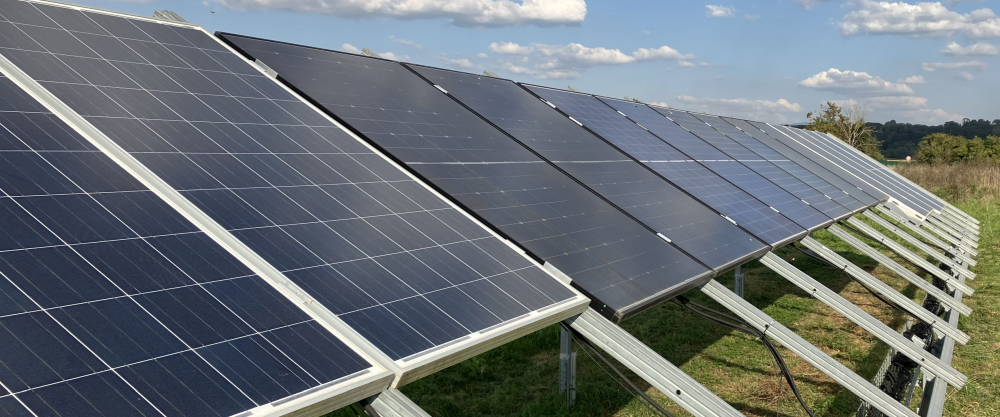
Reliable measurement data is essential for determining the performance of PV modules. The test field enables the precise collection of all relevant monitoring data. Together with classic laboratory tests, this data provides comprehensive and rapid information on the possible degradation and expected lifetime yield of PV modules and allows for their comparative evaluation.
One focus is on benchmarking PV modules with different cell technologies. Through continuous outdoor measurements and specific tests for shading tolerance, we determine the performance and reliability of the modules. This includes tests in different mounting and integration situations and under different climatic conditions, not only at the test field in Merdingen, Baden-Württemberg, but also at our test sites in Gran Canaria and the Negev Desert.
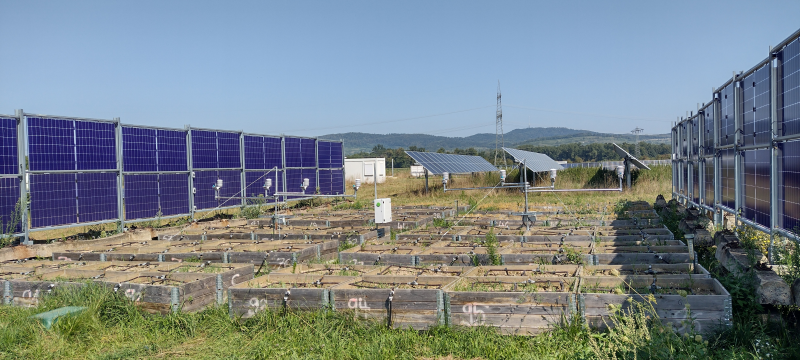
We analyze the electricity and agricultural yields of agrivoltaics systems in practical use in three flexible and modular agrivoltaics systems. Various agrivoltaics research systems with vertical and elevated PV modules of different light transmittance and orientation allow project planners to carry out a wide range of comparative measurements. New agrivoltaics concepts and technologies can thus be tested with low barriers to entry – without long-term approval and planning processes.
The possibilities for data collection include:
Measurements on water bodies are often challenging and the systems are difficult to access. Supplementing the monitoring of floating PV systems with a “twin” on land serves to test monitoring concepts and enables a meaningful benchmark between the land reference system and the demonstrators on the water via a performance evaluation. Of particular interest in data collection are the theoretical additional yield of FPV due to the evaporative cooling of the water and possible yield losses due to contamination, for example from bird droppings and other organic deposits.
In addition to testing individual PV modules, the test field also allows for the testing and analysis of entire PV systems. System orientation and tracker settings can be individually configured and adjusted.
Our services for industrial companies and public clients include:
Generation from PV systems is subject to significant fluctuations, influenced by weather, the position of the sun, and environmental conditions. Extensive meteorological measurements are therefore carried out for performance tests of PV modules and systems, in particular solar radiation.
In addition, predictions of solar radiation and PV performance are necessary in order to integrate fluctuating solar power into our energy system in a cost-efficient manner, including for grid management and electricity trading. In the test field, forecasts are used, among other things, to develop optimized control strategies for tracking PV systems.
In order to predict solar output for the next few minutes, hours, and days, we integrate different models and input data using machine learning methods.
The detailed measurements at the test site can be used to evaluate and benchmark forecast models.
The Outdoor Performance Test Field is to be expanded into an efficient, future-proof, and customer-oriented testing platform. The project focuses on testing laboratories for modules and batteries as well as the digitization and networking of the units. In the future, power plant components will be tested in a comprehensive test environment. A digital twin of the entire test field and customer-specific live access to data open up further possibilities and close the gap between laboratory testing and field use. This makes the test field an attractive testing environment for developers and buyers of modules and storage technologies.